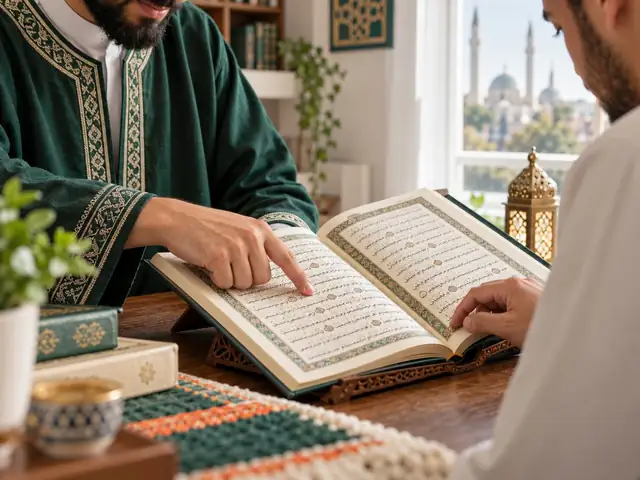
Makharij are the articulation points from which Arabic letters are pronounced. For Quran learners, they are one of the most important foundations of accurate recitation.
Why Makharij matter
Some Arabic letters are produced from nearby areas of the mouth or throat. Without clear articulation, one letter can sound like another.
Do not rely on transliteration
English spellings cannot fully represent Arabic sounds. Listening to a qualified teacher and seeing how the sound is produced is much more reliable.
Practise letters in isolation first
When a sound is difficult, practise it alone before placing it inside words. This makes it easier to identify the exact movement of the tongue, lips or throat.
Then practise inside real Quranic words
A sound may be easy alone but difficult in connected recitation. Move gradually from isolated letters to short words and then full verses.
Record and compare
Listening back to your own recitation can help you notice differences between your pronunciation and the teacher’s model.
Correction should be specific
Instead of hearing only “wrong,” learners benefit from knowing exactly where the sound should come from and what movement needs to change.
For a child who can read connected Quran words, explore Tajweed classes for kids to practise letter articulation in short passages with teacher feedback.
Makharij is a core part of Muruj’s Tajweed program. You can also read about common Tajweed mistakes.
Ready to build a clear learning plan?
Start with a free level assessment and get a learning path matched to your level and goals.