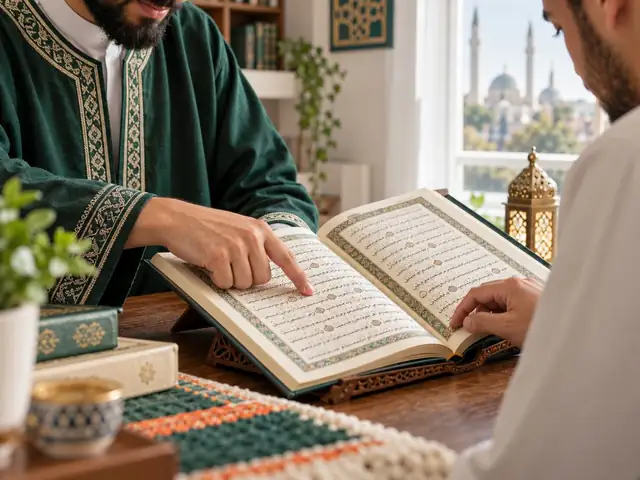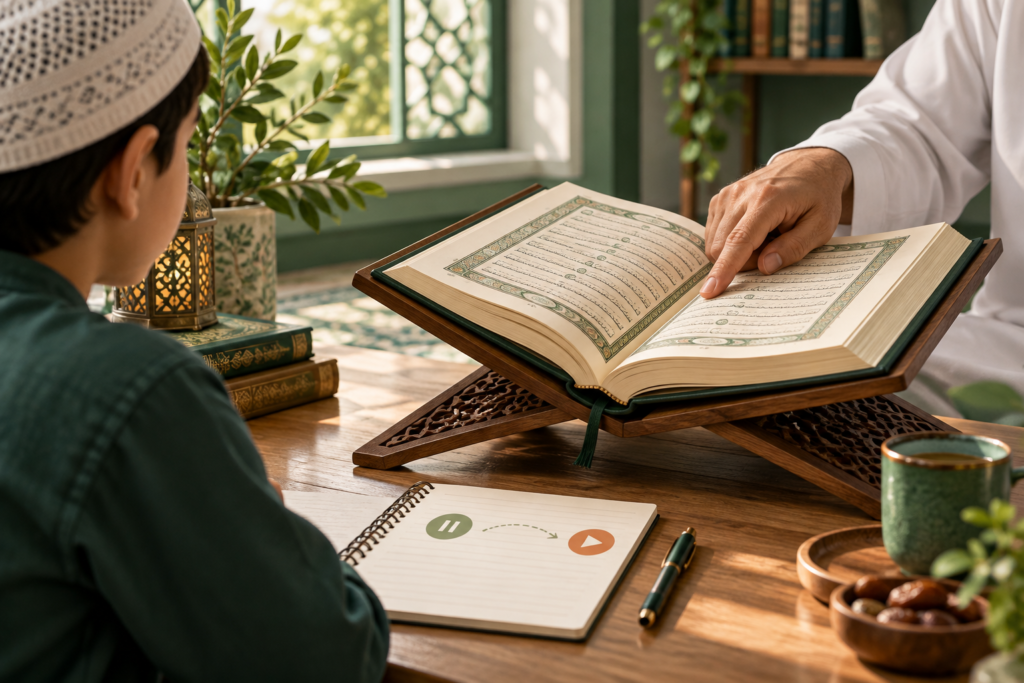
Waqf and Ibtida concern stopping and beginning during Quran recitation. A beginner may recognise letters and apply some Tajweed rules but still be unsure where to pause or how to resume after taking a breath. These skills need guided practice because recitation should preserve the connection and meaning of the passage.
This article explains how to approach learning them. It is not a complete reference for deciding every stopping point independently.
Why a pause is more than a breath
Where you stop can affect how a listener understands the words. The same applies when you begin again: restarting with a word that depends on what came before may leave the expression incomplete or confusing.
Your teacher can connect practical breath management with the wording and meaning. The aim is not to hold your breath as long as possible, but to recite at a manageable pace and resume appropriately.
Learn the signs in the Mushaf you use
Printed Mushafs include stopping symbols to guide recitation. The symbol system and explanatory key should be checked in your edition rather than assumed from a chart found online. Ask the teacher to explain the signs you encounter in your assigned passage.
Start with a small number of signs and practise them in context. Memorising the names without knowing how to respond while reciting does not establish the skill.
What if you run out of breath?
You may need to stop before the point you intended. Do not panic or rush the remaining words. Ask your teacher how to return to a suitable place and resume so the connection is clear.
Restarting is not always as simple as saying the next word. In some places the teacher may ask you to repeat an earlier phrase. Learn the reason in the passage being studied rather than applying one shortcut to every situation.
A practical lesson sequence
- Read a short passage at a comfortable pace.
- Identify the stopping signs and discuss the relevant connections.
- Listen to a model recitation of the assigned section.
- Practise a planned pause and appropriate restart.
- Review an unplanned stop and how to recover from it.
Keep the amount small enough for the teacher to hear and correct you. A recording is useful for listening, but it cannot tell you whether your own stopping and restarting have preserved the intended connection.
Keep a passage-based practice note
| Record | Purpose |
|---|---|
| Passage being practised | Keep the instruction tied to its context |
| Planned stop | Know where you intend to pause |
| Restart point | Recall where the teacher asked you to resume |
| Question | Mark uncertainty to discuss next lesson |
Use the actual Mushaf for checking the wording. If you annotate or keep separate notes, follow the teacher’s guidance and avoid creating marks that could be mistaken for part of the printed text.
Common habits to review
Notice whether you stop only when breath runs out, restart automatically from the next word, rush to reach a distant sign or change pace so much that accuracy suffers. These are useful observations to bring to a lesson, not reasons to feel discouraged.
Your teacher may recommend shorter phrases, steadier pacing or more work on reading fluency before adding technical detail. The appropriate next step depends on your current recitation.
How this relates to Tajweed and meaning
Stopping and restarting form part of careful Quran recitation alongside pronunciation and other Tajweed skills. Understanding the passage can help you follow the connections, but detailed decisions still need appropriate instruction.
For related reading, see improving Quran reading fluency. If you want a separate explanation of the verses, explore Tafsir in English.
Practise with someone who can listen
Muruj’s online Tajweed classes include guided recitation and appropriate stopping and starting practice. Book a free trial and mention the passages or signs you find confusing so the teacher can assess your next step.
Ready to build a clear learning plan?
Start with a free level assessment and get a learning path matched to your level and goals.